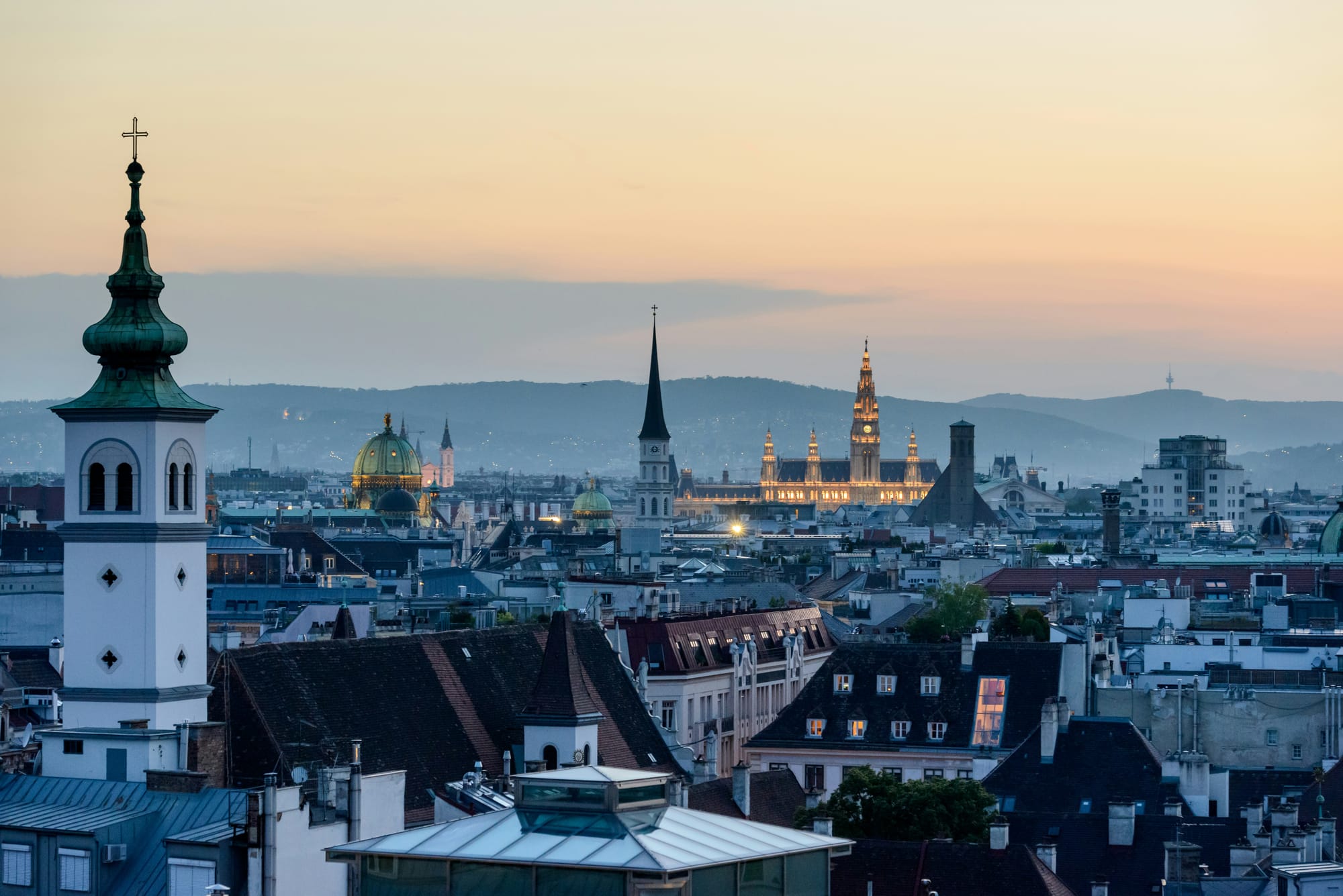
Vienna in 2026 is imperial history meeting modern creativity. Sip coffee where Freud pondered, then discover street art pulsing with today's energy. This city balances old-world grandeur with new-world vibes perfectly.
🏙️ 8 Essential Vienna Experiences
1. Schönbrunn Palace — The Habsburgs' Summer Playground

Step into 1,441 rooms of imperial splendor at Europe's second-largest palace complex. Schönbrunn isn't just a museum—it's a time machine that transports you to the world of Empress Maria Theresa and Emperor Franz Joseph. The 40-room Imperial Tour (€28 adults, €21 students) reveals gilded chambers where Mozart performed as a child prodigy and where the Congress of Vienna reshaped Europe. But the real magic happens in the 435-acre gardens, where you can lose yourself in hedge mazes, climb the Gloriette for panoramic views, or visit the world's oldest continuously operating zoo (founded 1752).
Why you should visit:
- UNESCO World Heritage site representing Baroque architecture at its finest
- The palace gardens are free to enter and perfect for picnics
- The world's oldest zoo houses over 700 species in historic enclosures
- Evening summer concerts in the Orangery feature Mozart and Strauss
What to do there:
- Take the Imperial Tour (€28) or Grand Tour (€38) with audio guide
- Climb the Gloriette (€5.50) for the best palace photo opportunities
- Get lost in the hedge maze and labyrinth (€7.50 combined ticket)
- Visit the Tiergarten Schönbrunn zoo (€27 adults, €14 children)
- Attend a summer evening concert in the Orangery (from €49)
Bookable experiences:
- Skip-the-line Palace Tickets: [Schönbrunn Palace & Gardens: Skip-the-Line Guided Tour] (€45, 2.5 hours)
- Palace Gardens Walking Tour: [Schönbrunn Palace Gardens Walking Tour] (€25, 1.5 hours)
Secret/local tips:
- Best photo spot: The Neptune Fountain with palace in background, late afternoon light
- Free alternative: The palace gardens are completely free to explore
- Hidden gem: The Desert House (Wüstenhaus) with rare succulents and flamingos
- Avoid: Weekends between 11am-3pm when crowds peak
- Little-known fact: The palace's 1,441 rooms include 40 that are bathrooms
Nearby eats/drinks:
- Café Residenz (50m): Traditional Viennese coffeehouse inside palace grounds, €4-8
- Landtmann's Jausen Station (100m): Casual garden café with Austrian classics, €10-15
- Brandauer's Schlossbräu (300m): Brewery restaurant with craft beers, €12-20
2. St. Stephen's Cathedral — Vienna's Gothic Heartbeat

For over 700 years, Stephansdom has watched over Vienna, surviving wars, fires, and empires. This magnificent Gothic cathedral isn't just a religious site—it's the city's spiritual and geographical centerpiece. Climb the 343 steps of the South Tower (€6.50) for breathtaking views across Vienna's rooftops, or descend into the catacombs where over 11,000 people are buried, including plague victims and Habsburg organs (yes, literally their internal organs). The cathedral's 230,000 colorful roof tiles form the imperial double-headed eagle, visible only from above or the neighboring Haas Haus viewing platform.
Why you should visit:
- Symbol of Vienna's resilience and spiritual heart
- Stunning Gothic architecture with 18 altars
- Catacombs offer a unique (if macabre) historical experience
- Central location makes it perfect for starting any Vienna exploration
What to do there:
- Admire the main nave and 18 altars (free entry)
- Climb the South Tower (€6.50) for panoramic views
- Visit the catacombs (€6) on a guided tour only
- Attend a mass with Vienna Boys' Choir (schedule varies)
- Explore the cathedral treasury (€6) with religious artifacts
Bookable experiences:
- Cathedral & Catacombs Guided Tour: [St. Stephen's Cathedral & Catacombs Guided Tour] (€35, 1 hour)
Secret/local tips:
- Best photo spot: Haas Haus rooftop terrace (free) for cathedral reflections
- Free alternative: Enter the main nave for free (donations appreciated)
- Hidden gem: The "Pummerin" bell in North Tower—Austria's largest at 21 tons
- Avoid: Midday when tour groups overwhelm the space
- Little-known fact: The cathedral has 23 bells, each with a specific purpose
Nearby eats/drinks:
- Café Diglas (150m): Historic coffeehouse since 1875, €5-10
- Figlmüller (200m): Famous for giant Wiener Schnitzel, €15-25
- Zum Schwarzen Kameel (300m): Historic delicatessen since 1618, €20-40
3. Belvedere Palace — Klimt's Golden Kiss
Two Baroque palaces separated by stunning French-style gardens house Austria's most important art collection. The Upper Belvedere is home to Gustav Klimt's "The Kiss," that shimmering gold masterpiece that has become synonymous with Viennese art. But there's so much more: Egon Schiele's raw expressionism, Oskar Kokoschka's vibrant portraits, and medieval altarpieces that glow with devotional intensity. The Lower Belvedere hosts rotating contemporary exhibitions, while the gardens—with their symmetrical parterres, fountains, and mythological statues—offer a peaceful escape from the city bustle.

Why you should visit:
- Houses the world's largest collection of Gustav Klimt paintings
- Stunning Baroque architecture and gardens
- Perfect blend of historical and contemporary art
- Less crowded than Schönbrunn but equally impressive
What to do there:
- See Klimt's "The Kiss" in Upper Belvedere (€19.50 adults)
- Explore medieval to modern art across both palaces
- Wander the symmetrical French gardens (free)
- Visit the Orangery and Palace Stables exhibitions
- Enjoy seasonal events like summer concerts
Bookable experiences:
- Skip-the-line Belvedere Tickets: [Belvedere Palace: Skip-the-Line Ticket] (€25, 2 hours)
- Art History Walking Tour: [Belvedere Palace Art History Tour] (€40, 2.5 hours)
Secret/local tips:
- Best photo spot: Reflecting pool between the two palaces at golden hour
- Free alternative: The gardens are completely free and open to the public
- Hidden gem: The Alpine Garden with rare mountain plants
- Avoid: Tuesday mornings when school groups visit
- Little-known fact: The palace was built for Prince Eugene of Savoy, not the Habsburgs
Nearby eats/drinks:
- Café am Belvedere (100m): Modern café with garden views, €6-12
- Salonplafond (300m): Michelin-starred fine dining, €80-150
- Würstelstand am Belvedere (50m): Classic Austrian sausage stand, €4-6
4. Hofburg Palace — Where Empires Were Ruled
For over 600 years, the Hofburg was the epicenter of Habsburg power, and today it remains Vienna's political and cultural heart. This sprawling complex isn't one building but a city within a city, encompassing the Spanish Riding School, the Austrian National Library, the Imperial Apartments, and the Sisi Museum dedicated to the enigmatic Empress Elisabeth. Don't miss the Imperial Treasury with its dazzling crown jewels, including the Imperial Crown of the Holy Roman Empire and the fabled Holy Lance. The nearby Michaelerplatz offers a fascinating architectural timeline, from Roman ruins to Loos House's stark modernism.

Why you should visit:
- Former imperial residence spanning Gothic to Art Nouveau
- Home to the famous Lipizzaner stallions
- Sisi Museum reveals the true story behind the romantic myth
- Central location connecting to most major attractions
What to do there:
- Visit the Sisi Museum & Imperial Apartments (€18 adults)
- Watch the Lipizzaner stallions train (€18) or perform (€35-120)
- Explore the Imperial Treasury (€14) with crown jewels
- Marvel at the Austrian National Library's Prunksaal (€10)
- See the Roman ruins at Michaelerplatz excavation site
Bookable experiences:
- Imperial Vienna Walking Tour: (€45, 3 hours)
- Spanish Riding School Tickets: (from €35, 2 hours)
Secret/local tips:
- Best photo spot: Heldenplatz with equestrian statues against palace backdrop
- Free alternative: Watch stallions training from standing room area (€18)
- Hidden gem: The Augustinian Church within the complex
- Avoid: Performance days if you just want to see the stables
- Little-known fact: The complex has 2,600 rooms across 59 acres
Nearby eats/drinks:
- Café Hofburg (inside): Elegant palace café, €8-15
- Demel (200m): Imperial confectionery since 1786, €10-20
- Trześniewski (300m): Famous open-faced sandwiches, €1.50 each
5. Vienna State Opera — Where Music Takes Center Stage
Even if you're not an opera buff, the Wiener Staatsoper is an essential Vienna experience. This Neo-Renaissance masterpiece hosts over 300 performances annually, ranging from classic operas to contemporary ballet. For budget travelers, standing room tickets (€4-15) offer access to world-class performances, while guided tours (€11) reveal backstage secrets. The opera house's recent digital innovations include augmented reality programs that bring productions to life on your smartphone—a perfect blend of tradition and technology for 2026 travelers.

Why you should visit:
- One of the world's busiest opera houses with 50+ productions yearly
- Stunning 19th-century architecture recently restored
- Accessible pricing with standing room tickets
- Symbol of Vienna's enduring musical legacy
What to do there:
- Attend a performance (seats €15-250, standing €4-15)
- Take a guided backstage tour (€11, 40 minutes)
- Enjoy the annual Opera Ball in February (tickets €300+)
- Visit during Vienna Festival weeks (May-June)
- Explore the digital exhibition about opera history
Bookable experiences:
- Opera House Guided Tour: (€45, 3 hours)
- Classical Concert Tickets: (from €35, 2 hours)
Secret/local tips:
- Best photo spot: From the Opernring tram stop at night
- Free alternative: Watch rehearsals occasionally open to public
- Hidden gem: The opera's own bakery supplying intermission treats
- Avoid: Last-minute ticket purchases for popular performances
- Little-known fact: The building was heavily criticized when built in 1869
Nearby eats/drinks:
- Café Mozart (100m): Historic coffeehouse, €6-12
- Sacher Eck (150m): For the original Sachertorte, €8-15
- Österreichische Nationalbank Café (200m): Rooftop views, €5-10
6. Naschmarkt — Vienna's Culinary Melting Pot
For over 400 years, the Naschmarkt has been Vienna's gastronomic heart, stretching over 1.5 kilometers with 120 market stands. By day, it's a vibrant food market where you can sample everything from Austrian cheeses to Middle Eastern spices. By Saturday, it transforms into a sprawling flea market where vintage hunters find treasures. The market's western end merges into the Freihausviertel, Vienna's emerging design district filled with concept stores and third-wave coffee shops—perfect for experiencing the city's contemporary creative scene.

Why you should visit:
- Vienna's oldest and largest market since the 16th century
- Perfect introduction to Austrian and international cuisine
- Saturday flea market offers unique souvenirs
- Shows Vienna's multicultural, contemporary side
What to do there:
- Sample local cheeses, meats, and produce
- Enjoy lunch at one of 20+ international food stalls
- Browse Saturday flea market (6am-5pm)
- Explore Freihausviertel design district
- Join a food tour (€45-65 per person)
Bookable experiences:
- Food Market Tour: [Naschmarkt Food Tour] (€65, 3 hours)
- Wine Tasting Experience: (€35, 2 hours)
Secret/local tips:
- Best photo spot: From the Kettenbrückengasse U4 station overpass
- Free alternative: Sampling is encouraged at many stalls
- Hidden gem: The farmers' market section on Saturdays
- Avoid: Monday when some stalls are closed
- Little-known fact: Market name comes from "aschen" (milk pails) sold historically
Nearby eats/drinks:
- Neni (inside): Modern Israeli cuisine, €15-25
- Tewa (inside): Vegetarian Middle Eastern, €10-18
- Umar (inside): Afghan street food, €8-15
7. Prater Park & Giant Ferris Wheel — Vienna's Playful Side
The Prater isn't just an amusement park—it's a 6-square-kilometer green oasis where Viennese have played since 1766. The iconic Riesenrad (Giant Ferris Wheel) has been turning since 1897, offering 20-minute rides (€13.50) in original wooden cabins with panoramic city views. Beyond the wheel, the Wurstelprater amusement area features over 250 attractions, from nostalgic carousels to adrenaline-pumping roller coasters. The rest of the park offers meadows, forests, and the Prater Hauptallee—a 4.4-kilometer chestnut-lined avenue perfect for cycling, running, or simply escaping the urban bustle.

Why you should visit:
- Historic amusement park dating to the 18th century
- Iconic Giant Ferris Wheel featured in "The Third Man"
- Massive green space for relaxation and recreation
- Shows Vienna's fun, playful side beyond imperial grandeur
What to do there:
- Ride the Giant Ferris Wheel (€13.50 adults)
- Explore Wurstelprater amusement area (free entry, pay per ride)
- Rent bikes or e-scooters to explore the park
- Visit the Prater Museum (€5) about park history
- Enjoy seasonal events like Christmas markets
Bookable experiences:
- Ferris Wheel & City Views: (€75, 5 hours includes Danube cruise)
- Vienna by Night Tour: (€75, 5 hours)
Secret/local tips:
- Best photo spot: From Ferris Wheel cabin at golden hour
- Free alternative: Walking or cycling through the park is free
- Hidden gem: The Liliputbahn miniature railway through the woods
- Avoid: Weekend afternoons when crowds peak
- Little-known fact: The Ferris Wheel survived WWII bombing though surrounding area was destroyed
Nearby eats/drinks:
- Schweizerhaus (inside): Famous for pork knuckle, €15-25
- Biergarten im Prater (inside): Traditional beer garden, €8-15
- Würstelstand am Riesenrad (inside): Classic sausage stand, €4-7
8. Kunsthistorisches Museum — Europe's Artistic Treasure Chest
The Kunsthistorisches Museum isn't just an art museum—it's a palace built specifically to house the Habsburgs' formidable art collection. The building itself is a masterpiece, with a stunning marble staircase leading to galleries filled with works by Bruegel, Rembrandt, Vermeer, and Raphael. The Kunstkammer (Chamber of Art and Wonders) displays priceless curiosities that fascinated Renaissance rulers, from intricate automatons to carved gemstones. Don't miss the café beneath the dome, where you can sip coffee surrounded by Klimt's ceiling paintings—an experience that perfectly captures Vienna's blend of art and everyday life.

Why you should visit:
- Houses one of Europe's most important art collections
- The building itself is an architectural masterpiece
- Unique combination of fine art and historical curiosities
- Café with Klimt ceiling paintings offers unique dining experience
What to do there:
- Explore the Picture Gallery (€21 adults, €16 students)
- Visit the Kunstkammer (included in ticket)
- See Egyptian and Near Eastern collections
- Enjoy coffee under Klimt's ceiling paintings
- Attend special exhibitions (additional fee)
Bookable experiences:
- Art Museum Guided Tour: (€45, 3 hours)
- Vienna Museum Pass: (€85, valid 3 days)
Secret/local tips:
- Best photo spot: From the center of the main staircase looking up
- Free alternative: First Sunday of each month offers free admission
- Hidden gem: The Coin Collection with 600,000+ items
- Avoid: Tuesday mornings when school groups visit
- Little-known fact: The museum opened in 1891, same year as its twin Natural History Museum
Nearby eats/drinks:
- Kunsthistorisches Museum Café (inside): Under Klimt ceiling, €8-15
- Café Museum (300m): Historic coffeehouse, €6-12
- Bitzinger Würstelstand (200m): Famous sausage stand, €4-6
🗓️ Perfect 3-Day Vienna Itinerary
Day 1: Imperial Vienna & Historic Heart
Morning (9am-1pm): Start at St. Stephen's Cathedral, climbing the South Tower for panoramic views. Wander through the historic center to Michaelerplatz, seeing Roman ruins and the Loos House. Visit the Hofburg Palace complex, focusing on the Sisi Museum and Imperial Apartments.
Afternoon (1pm-5pm): Lunch at Café Central or Demel for classic Viennese coffeehouse experience. Explore the Kunsthistorisches Museum's highlights (2-3 hours). Walk through the Burggarten to see the Mozart statue and Palm House.
Evening (5pm-9pm): Pre-theater dinner at Figlmüller for famous schnitzel. Attend a performance at the Vienna State Opera (standing tickets from €4) or a classical concert at Musikverein. Post-show drinks at Loos American Bar.
Bookable experiences: Imperial Vienna Walking Tour (€45, 3 hours)
Day 2: Palaces, Parks & Prater
Morning (9am-1pm): Take the U4 to Schönbrunn Palace. Do the Imperial Tour (book skip-the-line tickets in advance). Explore the palace gardens, climbing the Gloriette for views. Visit the zoo or maze if time allows.
Afternoon (1pm-5pm): Lunch at Café Residenz in palace grounds. Take U4 to Karlsplatz to see the Secession Building with its golden dome. Visit the Naschmarkt for food exploration and shopping.
Evening (5pm-9pm): Head to Prater Park. Ride the Giant Ferris Wheel at sunset. Enjoy traditional Austrian dinner at Schweizerhaus (pork knuckle) or modern options in Freihausviertel. Experience Prater by night with illuminated rides.
Bookable experiences: Schönbrunn Palace Skip-the-line (€25, 2 hours)
Day 3: Art, Music & Modern Vienna
Morning (9am-1pm): Visit Belvedere Palace to see Klimt's "The Kiss" and Austrian art. Walk through the gardens to the Lower Belvedere for contemporary exhibitions. Coffee at Café am Belvedere.
Afternoon (1pm-5pm): Lunch at Naschmarkt (multiple options). Visit the Secession Building to see Klimt's Beethoven Frieze. Explore the MuseumsQuartier complex, choosing between Leopold Museum (Schiele, Klimt), MUMOK (modern art), or Kunsthalle (contemporary).
Evening (5pm-9pm): Early dinner in Spittelberg's cobblestone streets. Attend a chamber music concert in a historic palace or church. Finish with drinks at Dachboden rooftop bar or traditional Heuriger wine tavern in Grinzing.
Bookable experiences: Belvedere & Klimt Tour (€45, 3 hours)
🧠 Essential Vienna Tips for 2026
Best months to visit: April-May and September-October offer mild weather and fewer crowds. Summer (June-August) is peak season with festivals but higher prices. Winter (December) has magical Christmas markets but short daylight hours.
Weather breakdown: Spring 8-18°C (variable), Summer 18-28°C (sunny), Autumn 6-16°C (crisp), Winter -2-5°C (cold, possible snow). Always carry layers and an umbrella.
Transport specifics: Vienna Card (€17/72 hours) offers unlimited public transport plus discounts. Single tickets €2.40, 24-hour €8, weekly €17.10. Download Wiener Linien app for real-time info. Bikes available through Citybike Wien (first hour free).
Money & tipping: Austria uses Euro (€). Credit cards widely accepted. Tip 5-10% in restaurants (round up bill). No tipping in taxis but round up fare.
Safety tips: Vienna is very safe. Normal precautions apply in tourist areas. Emergency number: 112. Tap water is excellent and free.
Must-try foods (5-7 items):
- Wiener Schnitzel (veal breaded cutlet) - €15-25
- Sachertorte (chocolate cake) - €6-8 slice
- Apfelstrudel (apple strudel) - €4-6
- Tafelspitz (boiled beef) - €18-25
- Kaiserschmarrn (shredded pancake) - €8-12
- Brettljause (cold cuts board) - €12-18
- Melange (Viennese coffee) - €3.50-5
Booking tip: Use Viator for skip-the-line tickets and tours - often 10-20% cheaper than buying at the gate, especially for Schönbrunn Palace and Belvedere. Book at least 2 days in advance for popular attractions.
Pro tip: Download "Qando Wien" app for public transport, "WienMobil" for bike/scooter/car sharing, and "Falter" for events listings.
🏨 Where to Stay in Vienna (2026 Prices)
Budget (€60-100/night):
- Wombat's City Hostel Vienna Naschmarkt: Modern hostel with bar, €25-35 dorm, €70-90 private
- Ibis Budget Wien Messe: Basic but clean, near Prater, €65-85
- Hotel Austria: Family-run, excellent location, €80-100
Mid-Range (€100-200/night):
- Hotel Kaiserhof Wien: Elegant 4-star near Westbahnhof, €120-160
- Ruby Marie Hotel Vienna: Design hotel with rooftop, €140-180
- Hotel am Parkring: Modern with park views, €160-200
Luxury (€200-400+/night):
- Hotel Sacher Wien: Legendary luxury, home of Sachertorte, €300-500
- Park Hyatt Vienna: Former bank building, spa, €350-550
- Palais Coburg Residenz: Historic palace hotel, €400-700
🎭 Beyond the Tourist Trail
Emerging neighborhoods: Explore Brigittenau's industrial-chic vibe, Favoriten's authentic immigrant cuisine, and Ottakring's vibrant Brunnenmarkt street market.
New for 2026: Don't miss the renovated Wien Museum Neu, Haus der Musik's AI music experiences, and new beach bars on Danube Island.
Seasonal highlights: Christmas markets in winter, Vienna Festival in spring, free open-air cinema in summer, and wine harvest festivals in fall.
❤️ Final Word + CTA
Vienna in 2026 lets you live imperial history while writing the city's future. You'll leave with memories of golden-lit evenings that feel both timeless and completely now.
Want a personalized Vienna itinerary? Try VoyaBear today.